Bedding & Sleep Comfort
A Practical Guide to Choosing Sheets for Comfort and Easy Care
The right sheets can change the feel of your bed in an instant: crisp or silky, airy or cozy, easy to wash or best handled with extra care. Fabric, weave, fit, and laundry habits all matter—and thread count alone won’t tell you which set will feel right.
Sheets are the part of a bed you meet first and spend the longest time touching. They can feel cool and crisp when you slide in, soft and drapey as they settle around you, or frustratingly warm halfway through the night. Yet shopping for them can quickly turn into a maze of fiber claims, weave names, thread-count numbers, and promises of hotel-style luxury.
A more useful approach is to start with your own experience. Do you tend to feel warm while sleeping? Do you love the smoothness of a close, silky surface, or do you prefer a fresh, crisp hand? How often do you wash your bedding, and how much effort do you want to spend on ironing or special care? Those answers can narrow the field more reliably than a headline number on a package.
This guide explains the practical differences between common sheet materials and weaves, how to check fit, what care labels can tell you, and how to build a simple routine that keeps bedding comfortable. The goal isn’t to declare one fabric the best for everyone. It’s to help you choose sheets that suit your preferences and your real life.
Start with the feel you want
When people talk about comfortable sheets, they may mean very different things. For one sleeper, comfort is a smooth surface that glides over the skin. For another, it is a light, breathable fabric that doesn’t cling. Someone else may care most about a bed that feels freshly made, launders without fuss, and is ready to use again the same day.
Try to describe your preference in everyday terms before comparing labels. “Crisp and cool” often points shoppers toward cotton percale. “Smooth and drapey” may lead them to cotton sateen. If you are still unsure, think about the bedding you have enjoyed in the past—at home, while traveling, or in another setting—and identify what you liked about its feel.
Sleep temperature is another helpful clue, although sheets are only one part of the equation. A warm bedroom, a thick comforter, a mattress that holds heat, and individual temperature preferences can all shape how hot or cool a bed feels. Changing sheets may help adjust the surface sensation, but it cannot compensate for every feature of the sleep environment. Consider the whole bed rather than expecting one fabric to solve everything.
Cotton percale: crisp, light, and straightforward
Percale describes a plain, balanced weave often associated with a crisp, matte feel. Cotton percale sheets are popular with people who enjoy a fresh, airy surface rather than a glossy or especially drapey one. They can feel structured at first and tend to soften with repeated washing and use.
Because percale is commonly chosen for its light, breathable character, it may be worth considering if you often feel warm at night or dislike sheets that cling closely. “Breathable,” however, is not a guarantee that you will sleep cool in every room or season. The fiber, fabric weight, room temperature, blankets, and personal comfort all play a role.
Percale can also suit a simple, unfussy laundry routine. Check the product’s care label rather than assuming every cotton set should be washed or dried in the same way. Lower drying heat and taking sheets out promptly can help reduce excessive wrinkling and wear. If a crisp appearance matters to you, remember that percale may wrinkle more visibly than some smoother, heavier fabrics.
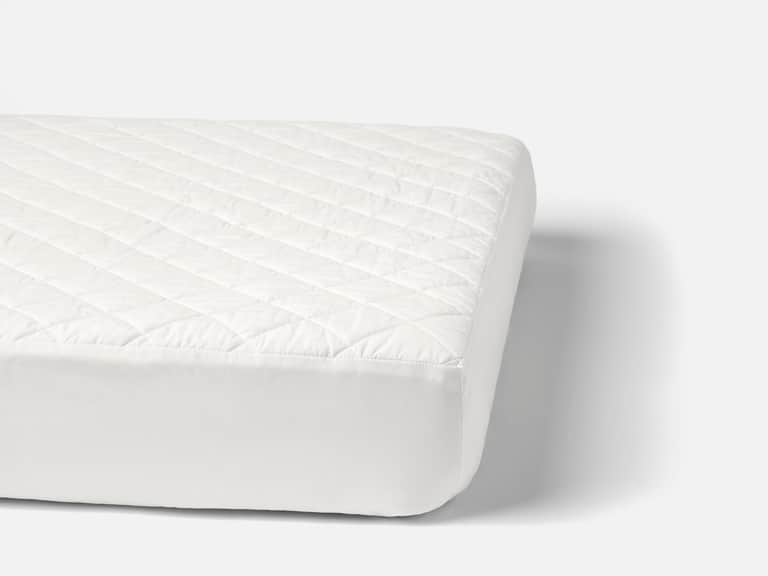
For an example of percale construction in another bedding item, the Organic Crib Mattress Pad has a 220-count percale cover. That detail illustrates the weave name in context; it is a mattress pad, not a sheet set, and its specifications should not be treated as a guide to all percale fabrics.
Cotton sateen: smooth and softly draped
Sateen is a weave structure that typically creates a smoother face and a more noticeable drape than percale. Cotton sateen sheets often feel soft and fluid, with a subtle sheen. If you prefer bedding that settles close to the body rather than holding a crisp shape, this texture may appeal.
The same close, smooth feel that some sleepers love may feel warmer or less airy to others. That doesn’t make sateen inherently unsuitable for warm sleepers; the result depends on the specific fabric and the rest of the bed. If temperature is a concern, look for clear information about fiber, fabric weight, and care, and consider whether your duvet or comforter may be contributing more to warmth.
Sateen’s smooth surface can feel inviting right out of the package, but care still matters. Follow the manufacturer’s washing and drying instructions, avoid overloading the washer, and use a suitable amount of detergent. Excess detergent and fabric softener can leave residue on textiles, which may affect how they feel over time. When in doubt, start with the care label and keep the routine simple.
Thread count: a number, not a comfort score
Thread count is often presented as a shortcut for softness or quality, but it is only one part of a fabric’s description. It refers to the number of threads counted in a square inch of fabric, including lengthwise and crosswise threads. The number does not, by itself, tell you the fiber source, the quality of the yarn, the weave, the fabric’s weight, or how it will feel after repeated washing.
A very high number is not automatically a sign that sheets will be more comfortable or durable. Construction and material choices matter, and a useful comparison should include the whole specification: fiber content, weave, finish, dimensions, and care instructions. If a product listing emphasizes a single number while leaving those details unclear, you have little basis for judging whether it matches your needs.
Instead of shopping by thread count alone, use it as background information where available. Give more weight to the features you can connect to your preferences: percale or sateen, cotton or another stated fiber, a crisp or smooth finish, and a care routine you are willing to follow. If possible, feel a fabric sample before buying; a number cannot recreate that tactile experience.
Consider fiber, finish, and labels together
“Cotton” identifies a fiber, while “percale” and “sateen” describe weave structures. Keeping those terms distinct makes bedding labels easier to understand. A cotton sheet can be woven in different ways, and products made from the same broad fiber category can still vary in weight, softness, and finish.
You may also encounter labels describing organic content, certifications, or manufacturing standards. These can provide useful information when they are clearly explained, but they do not automatically predict whether a sheet will feel cool, crisp, soft, or smooth. Evaluate those claims separately from comfort and care. For example, a certification may speak to how materials are sourced or processed; it does not replace details about weave, dimensions, or washing instructions.
Pay attention to language about finishes, too. A fabric may be treated to change its initial hand or appearance. If you have sensitive skin, allergies, or particular material concerns, review the full fiber and finish information and contact the manufacturer when important details are missing. Avoid assuming that a vague phrase such as “natural” or “pure” answers every question about a product’s contents.
Getting the fit right: measure before you buy
A comfortable sheet still needs to stay in place. A fitted sheet that is too shallow may pull off the corners; one that is much too deep can bunch beneath you. Before choosing a set, check your mattress dimensions and the depth of its fitted-sheet pockets.
Measure the mattress from the top surface to the bottom edge, including any mattress pad or topper you plan to leave on the bed. A topper can add enough height to change what pocket depth you need. Compare the resulting measurement with the sheet’s stated pocket depth, and look for any guidance about maximum mattress height. Do not rely on the mattress size alone: two mattresses labeled “queen,” for example, can differ in depth.
If you use a mattress protector or padded layer, include it in your fit check. A fitted sheet that just covers the bare mattress may not stretch comfortably over the full setup. Deep-pocket sheets can help with a taller bed, but the pocket depth should still be appropriate; excess fabric can make it harder to achieve a smooth fit.
- Confirm the mattress size and measure its depth.
- Include any topper or mattress pad that will stay on the bed.
- Check the fitted sheet’s pocket depth and stated maximum mattress height.
- Review whether the set includes pillowcases in the sizes you use.
- Keep the packaging or order details until you have checked the fit at home.
Choose sheets for the laundry routine you actually have
Easy care is not a small detail. A sheet set that requires more attention than you can give it may become a source of annoyance, no matter how lovely it feels on the first night. Before buying, read the care label and ask yourself whether the instructions fit your household: Can the sheets be machine washed? Is a particular water temperature recommended? Do they need a gentle cycle, line drying, or professional cleaning?
Most importantly, do not infer care requirements from fiber names alone. Two cotton items can have different construction and finishing, and a blended fabric may have instructions that differ from those for another blend. Follow the instructions for the specific set you own. If you have limited drying space, check whether line drying is recommended or whether low-temperature tumble drying is permitted.
A practical routine usually begins with separating sheets from items that have zippers, hooks, or rough surfaces that could catch the fabric. Avoid packing the washer so tightly that sheets cannot move freely, and use detergent according to its directions. Excess heat can increase wear and wrinkling, so use the lowest drying setting that safely suits the care label. Remove bedding soon after the cycle finishes and fold it or place it back on the bed.
How often to wash sheets depends on personal preference, household circumstances, and any specific advice you have been given by a health professional. A regular schedule makes the task easier to remember, while owning a spare set can give you time to wash and dry one set without rushing. If you have skin sensitivities, follow the advice that best fits your needs and consider whether detergent or fabric softener could be affecting comfort.
Think about durability and everyday use
Sheets experience repeated stretching, washing, drying, and friction. Durability depends on more than a headline thread count. Fiber quality, yarn construction, fabric weight, seams, fit, and care all influence how a set holds up. A fitted sheet that is consistently overstretched over a mattress that is too deep may wear faster at the corners, while harsh washing and high heat can shorten the useful life of many fabrics.
Look at the stitching and finishing when product information or a sample is available. Check whether the pillowcases and top sheet are finished in a way you find comfortable, and whether the fitted sheet has elastic around the full edge or only at the corners. These construction details do not guarantee longevity, but they help you understand what you are buying.
For a busy household, a straightforward, machine-washable set may be more useful than a delicate option that needs special handling. For a guest bed used occasionally, a different balance of texture and maintenance may suit. The best purchase is the one that fits both the bed and your habits—not an imagined routine that will be hard to maintain.
A quick sheet-buying checklist
When you are comparing options, pause before you get drawn into promotional claims. This short checklist can help you make a more grounded decision:
- Feel: Do you prefer crisp and light, or smooth and drapey?
- Weave: Does percale or sateen better match the surface texture you enjoy?
- Fiber: Is the material clearly identified, including any blends?
- Temperature: Could the sheet’s weight and feel work with your room and other bedding?
- Fit: Does the pocket depth account for your mattress, protector, and topper?
- Care: Can you follow the washing and drying instructions consistently?
- Details: Are dimensions, included pieces, and relevant certifications described clearly?
- Value: Does the set meet your practical needs, rather than relying on one impressive-sounding claim?
Common sheet-shopping mistakes to avoid
Buying by thread count alone. A high number cannot tell you how the fabric feels or whether it suits your preferences. Compare weave, fiber, weight, fit, and care together.
Forgetting a mattress pad or topper. Measuring only the mattress can lead to a fitted sheet that slips off once the full bed is assembled. Check the finished height you need to cover.
Assuming “cooling” means cool for everyone. Product descriptions may be useful, but comfort varies. Room conditions, blankets, and individual preferences still matter.
Ignoring the care label. A fabric that feels wonderful may not be practical if its laundry requirements conflict with your routine. Read instructions before purchasing, not after the first wash.
Expecting the first feel to stay exactly the same. Many fabrics change with use and laundering. Some soften, some wrinkle, and some may feel different depending on how they are dried. Follow care directions and give a new set a fair trial.
A few useful questions before you decide
Are percale sheets always cooler than sateen?
Not necessarily. Percale is often chosen for a crisp, airy feel, while sateen is usually smoother and more closely draped. The fabric’s weight, fiber, bedding layers, room temperature, and your own preferences affect how warm or cool either option feels.
Is a higher thread count always better?
No. Thread count alone does not establish comfort or quality. Use it as one specification among several, and give close attention to the fiber, weave, finish, dimensions, and care instructions.
How do I know what fitted-sheet depth I need?
Measure the mattress from top to bottom and include any pad or topper that will remain in place. Compare that measurement with the sheet’s stated pocket depth and maximum mattress height.
What is the easiest way to keep sheets in good condition?
Follow the product’s care label, avoid overloading the washer, use detergent as directed, and avoid unnecessary heat. A spare set can also make it easier to keep bedding fresh without rushing the laundry cycle.
The bottom line
Choosing sheets is less about finding a universal winner and more about matching fabric to the way you sleep and live. Cotton percale tends to offer a crisp, breathable feel; sateen is often smoother and more draped. Neither texture is automatically right for every sleeper, and thread count cannot make the decision for you.
Start with the feel you enjoy, then check fiber and weave. Measure your mattress with all its layers, read the care instructions, and consider how the sheets will fit into your laundry routine. Those practical details are what turn a promising set into bedding you reach for again and again.